Le Défi des Nombres is a number target game for Android. You receive five numbers and one target, then combine them with addition, subtraction, multiplication and division until you land exactly on the target.
The rules take about twenty seconds to learn. It is a relaxed way for students who struggle with maths to practise mental calculation without a worksheet in front of them. No ads, and a short tutorial gets you playing in seconds.
Get Le Défi des Nombres
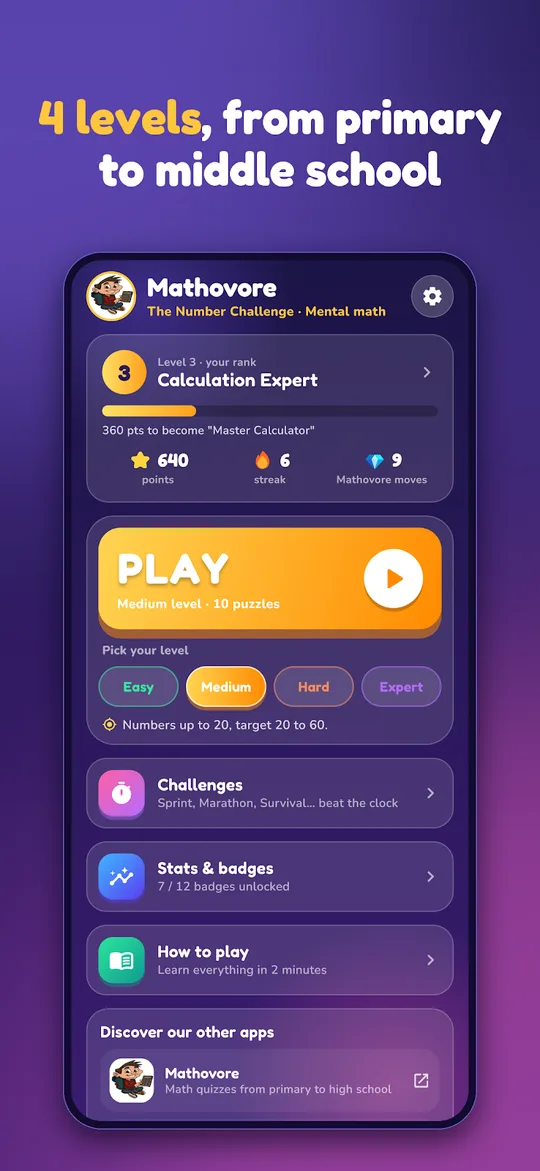
At a glance
- Platform: Android
- Goal: reach a target with five numbers
- Levels: four, plus timed challenges
- Suited to: Grade 4 (CM1) to Grade 9 (3ème)
- Ads: none
How the number target game works
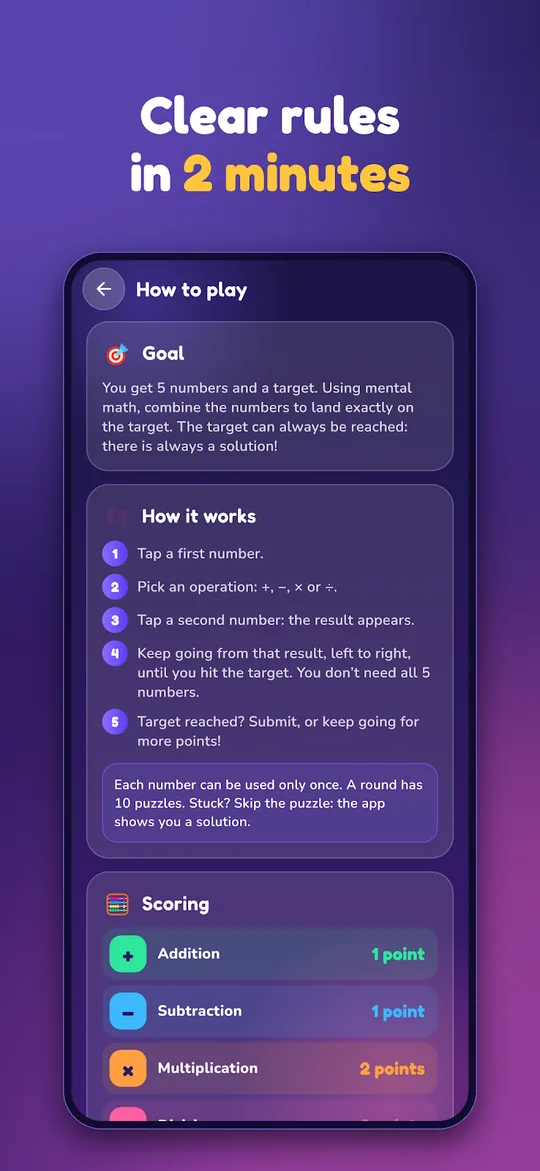
You tap a number, an operation, then another number. The result appears and can be used again. Each number can be used only once, and a division has to come out exact. The target can always be reached, so a solution exists even when it is hard to see.
If you get stuck you can skip the grid and look at one solution, which makes it a good way to learn new tricks.
Who it is for
The store listing suggests primary and middle school students from CM1 (Grade 4) to 3ème (Grade 9), as well as parents and teachers. For a student who says they are bad at maths, a puzzle can feel less threatening than a test, and it still builds the same skills: multiplication tables, exact divisions and thinking ahead.
Features
- Four levels: easy with targets from 10 to 40, medium, hard and expert with targets up to 300
- Scoring that rewards bold moves: 1 point for addition or subtraction, 2 for multiplication and 3 for division
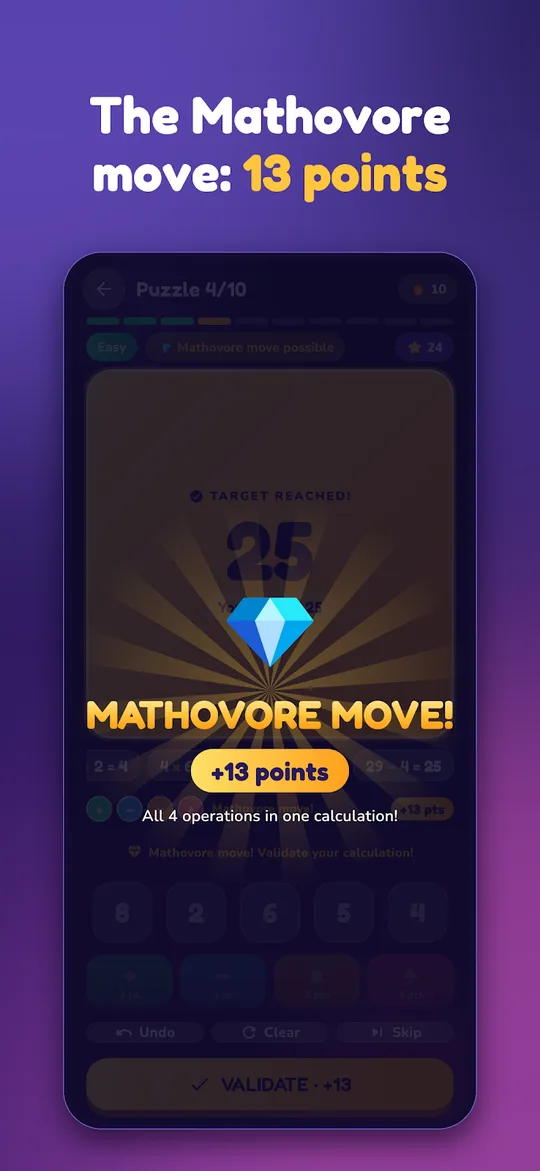
- A 13-point bonus when all four operations appear in one calculation
- Rounds of 10 grids, worth up to 130 points
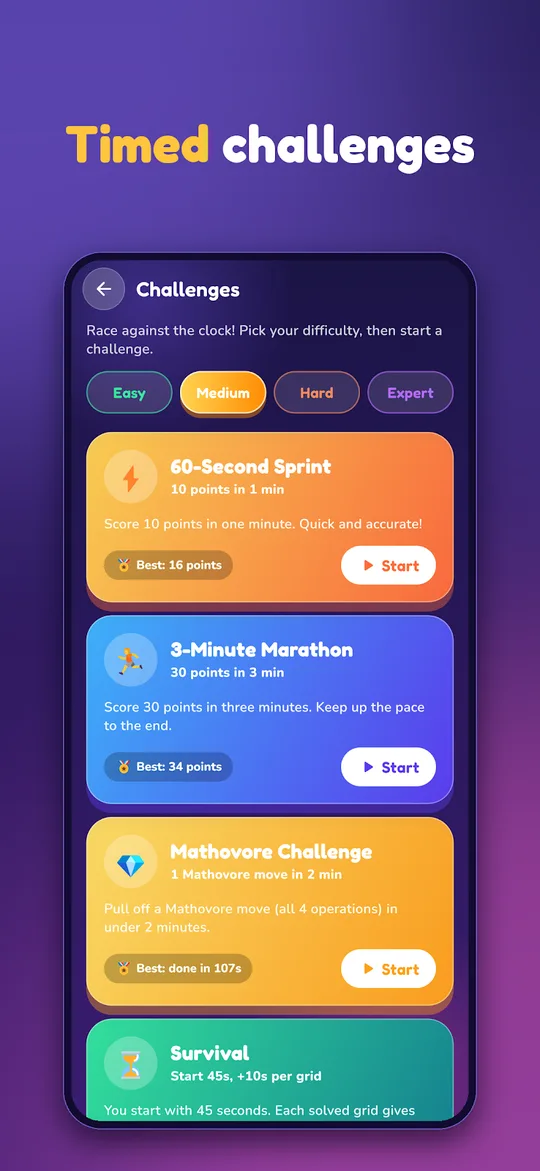
- Timed modes: a 60-second sprint, a 3-minute marathon, a special challenge and a survival mode where each solved grid earns extra time
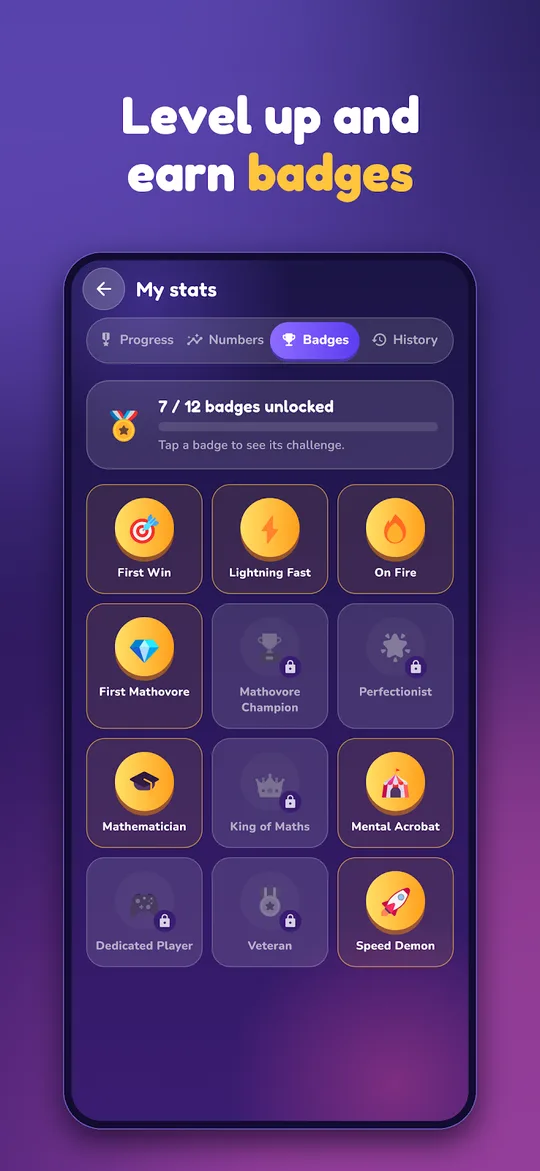
- Six ranks, 12 badges, win streaks, statistics and a history of your calculations
- A short animated tutorial and a worked example
- No ads, in French and in English
Getting started
- Install the game from Google Play.
- Watch the animated tutorial, which takes about twenty seconds.
- Start at the easy level and play a full round of 10 grids.
- When a grid beats you, view the solution and note the idea you missed.
- Move to the medium level once most grids feel comfortable.
Links with the rest of the site
The game exercises the facts that appear in school maths every day. After a few rounds, go to the Grade 6 (6ème) lessons to see where the same skills show up, then check your understanding with a Grade 6 quiz.
Tips for slow starters
Look for easy pairs first, such as two numbers that multiply to something close to the target. Work backwards from the target when the grid looks stuck. Play a few minutes a day instead of one long sitting, and avoid the timed modes until the easy level feels natural. Progress here is quiet but real: a streak of wins is proof that your mental maths is improving.
Parents and teachers can play too. Sit beside a child, take turns on the same grid, and say your reasoning aloud. Hearing a different route to the same target teaches a child that there is rarely only one way to solve a maths problem, and that is a useful idea well beyond this game.
Frequently asked questions
What is Le Défi des Nombres?
It is an Android game where you get five numbers and a target. You combine the numbers with the four operations to reach the target exactly. Each number is used once, and the game guarantees that a solution exists.
Does the number target game help with mental maths?
Yes. The description says it trains multiplication tables, exact division and reflective calculation. Because you must plan several steps, you practise strategy as well as speed, and you can skip a grid to see one solution.
What difficulty levels are there?
There are four levels. Easy uses targets from 10 to 40, medium from 20 to 60, hard from 40 to 120 and expert from 60 to 300. There are also timed modes such as a 60-second sprint and a 3-minute marathon.
Is the app suitable for children?
The listing recommends it for primary and middle school students from CM1 (Grade 4) to 3ème (Grade 9), and also for parents and teachers. It has no ads, and a short animated tutorial explains the rules.
