
Maths Automatismes is a middle school math drills app for Android. It trains the quick reflexes of Grade 6 (6ème) to Grade 9 (3ème) maths, a few minutes a day, with one question at a time and an instant correction.
Many marks are lost on small slips, such as a forgotten priority or a vanished minus sign. This app aims at those slips, and it works well for students who find big revision sessions discouraging.

Get Maths Automatismes
At a glance
- Platform: Android
- Levels: Grade 6 (6ème) to Grade 9 (3ème)
- Themes: 21
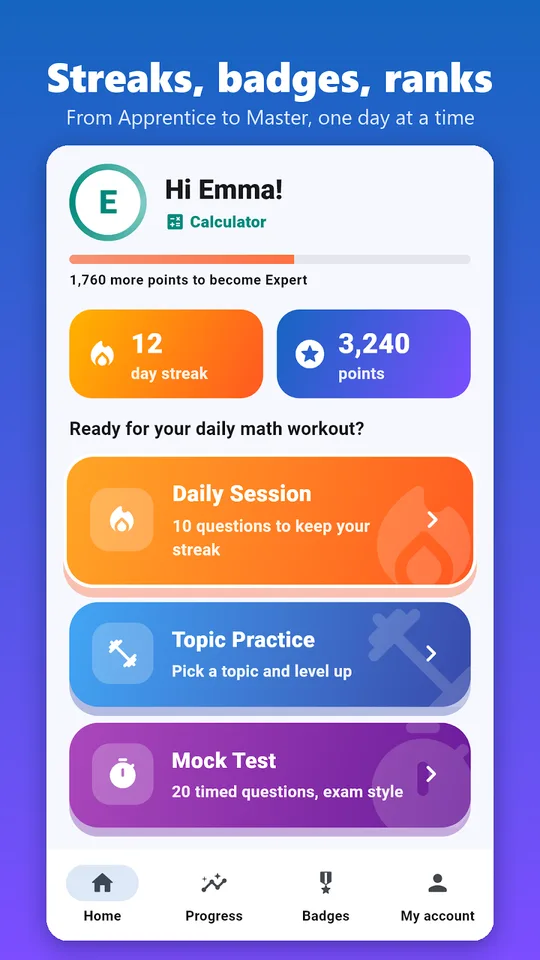
- Modes: daily session, theme training, mock test
- Works offline: yes
Why a middle school math drills app works
Losing points on simple calculations is rarely a lack of understanding. It is usually a lack of repetition. Short, regular practice builds reflexes so that on test day your energy goes to the harder problems.
Every question is generated with random values, so you cannot memorise answers. You learn the method instead.
Three training modes
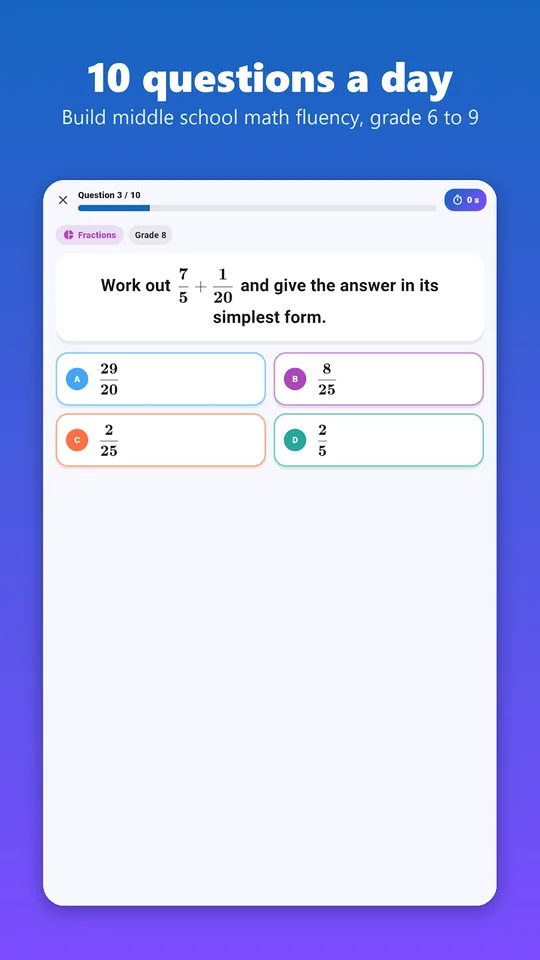
- Daily session: 10 mixed questions from the themes you most need to work on
- Training by theme: pick one topic and keep going until you master it
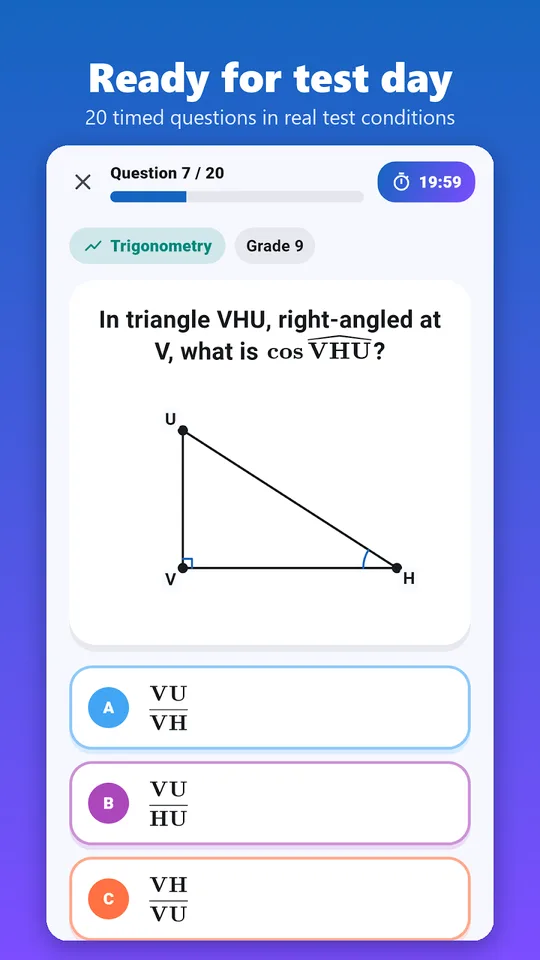
- Mock test: 20 timed questions to prepare for the brevet, the exam at the end of middle school
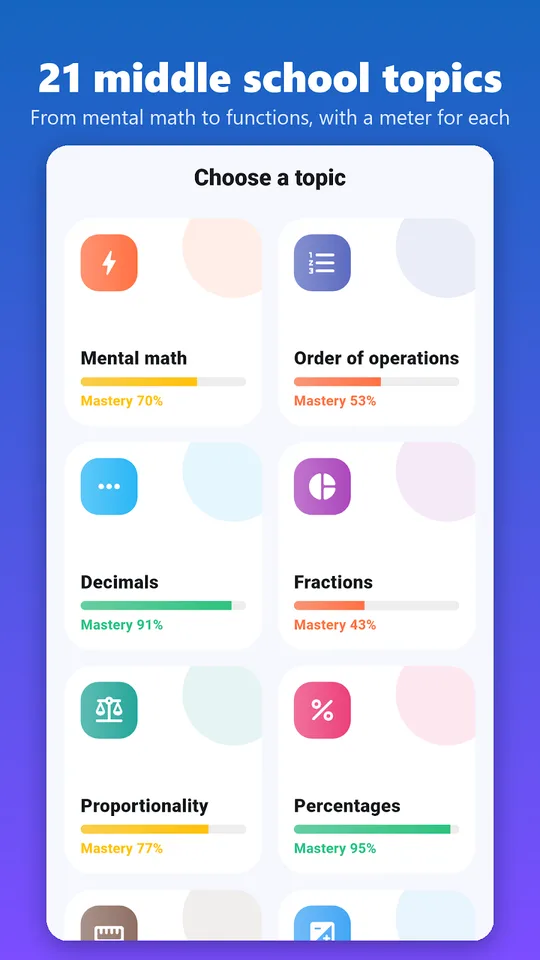
The 21 themes include mental maths, order of operations, decimals, fractions, proportionality, percentages, unit conversion, negative numbers, powers, algebra, equations, angles, perimeters and areas, volumes, the Pythagorean theorem, Thales, trigonometry, statistics, probability, graph reading and functions.
Features that help you remember
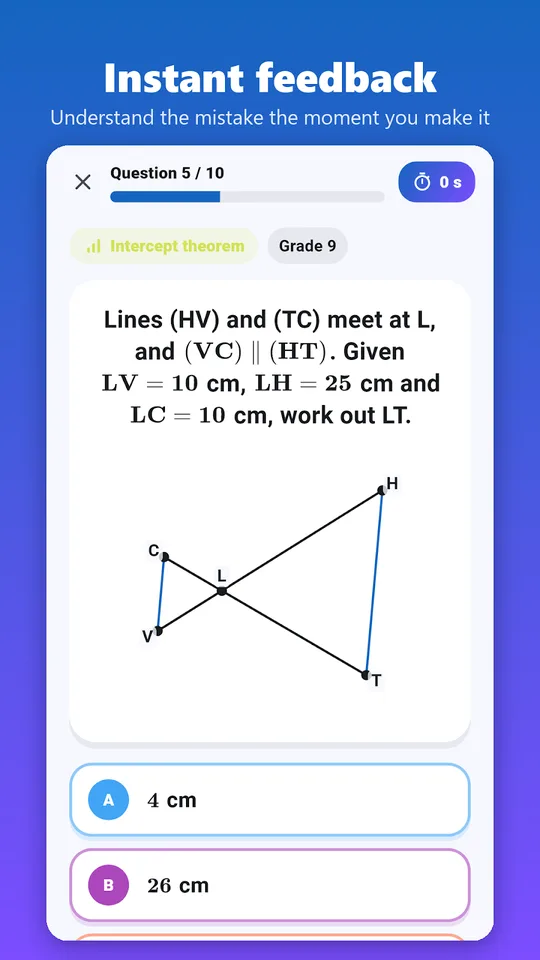
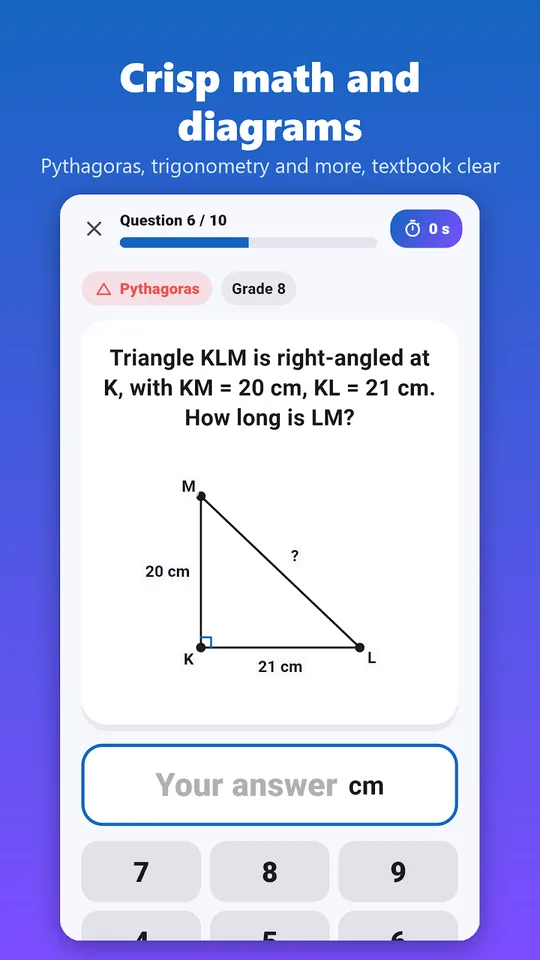
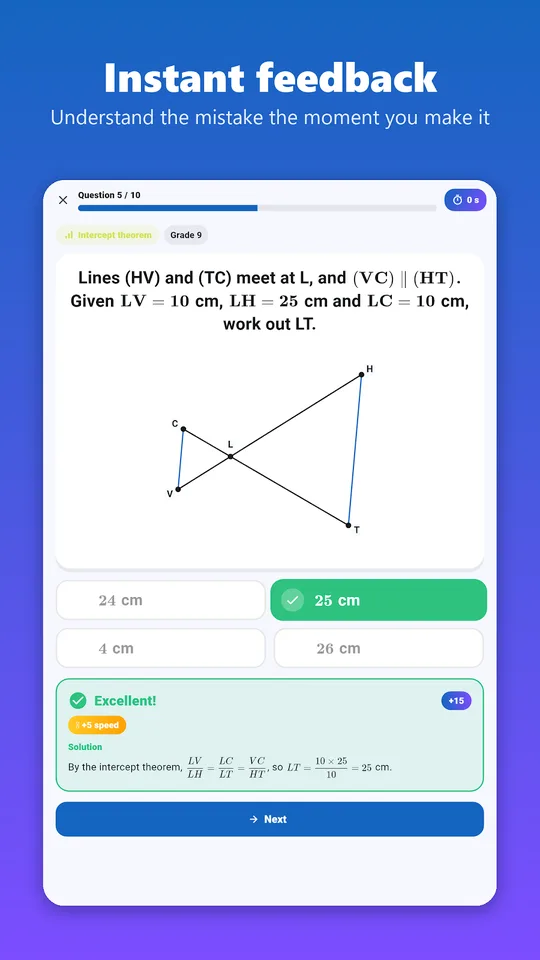
- Correction right after each answer, with formulas displayed like a textbook
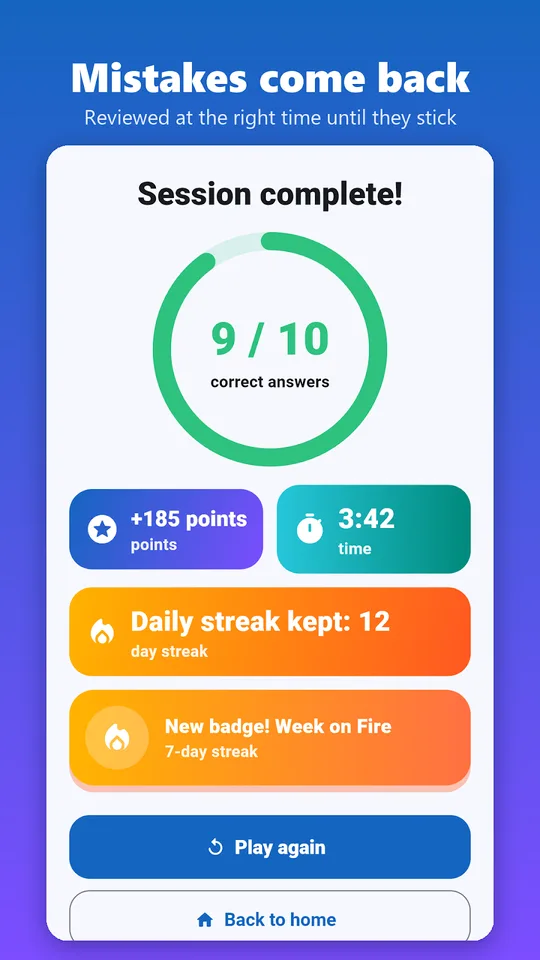
- Missed questions come back later, at growing intervals (spaced repetition)
- Figures that go with the geometry questions
- A mastery gauge for each theme, a daily streak, badges and four ranks
- A daily reminder
- Offline use, no ads, French and English
Getting started
- Install Maths Automatismes from Google Play.
- Begin with the daily session to get a first picture of your level.
- Check the mastery gauges and choose your weakest theme.
- Train on that theme until the questions feel easy.
- Take a mock test before a real exam.
Who it is for and how it fits with Maths Facile
The description names Grade 6 to Grade 9 students, students preparing the brevet, students in Seconde (Grade 10) who want to revisit the basics, and parents who want a short and useful activity. On this site, Grade 8 lessons and Grade 8 quizzes give the full explanations, while the app gives the fast repetition.
A routine that works
Ten questions a day is small, yet over a school year it adds up to thousands of reflexes. Do the session at a fixed time, such as after dinner. If a theme keeps showing a low gauge, reread the lesson on the site, then come back. Your mistakes will return at the right moment, which is exactly what makes them stick.
Making the most of the mastery gauges
Each of the 21 themes has its own gauge. Treat the gauges like a map. High gauges can wait. Low gauges deserve a short session this week. Looking at the map once a week takes two minutes and stops you from drilling only the topics you already enjoy.
Parents can look at the same screen and ask one simple question: which theme will you train this week? That keeps the conversation about the next step, not about a bad mark.
Frequently asked questions
What are maths automatismes?
They are quick maths reflexes, such as applying the order of operations or converting units without hesitation. Training them with short daily questions helps you avoid small errors in tests and exams.
Which grades does Maths Automatismes cover?
It covers Grade 6 (6ème) to Grade 9 (3ème), and the description says it also suits students in Seconde (Grade 10) who want to go back over the basics before the brevet or high school work.
Does the app work without internet?
Yes. The description says it works offline, so you can practise on the bus or at school. It has no ads, and the interface is in French and in English.
How does the app help me remember my mistakes?
Questions you miss come back a little later, then at longer intervals. This is called spaced repetition, a well-known memory method. A correction appears right after every answer to explain the method.
